
Don’t make a game.
Make a series.
A series stacks multiple games under one umbrella — one leaderboard, one prize, one persistent room for the chatter. Every new game brings your audience back. Every new game compounds your sponsorship. It’s the difference between a moment and a relationship.
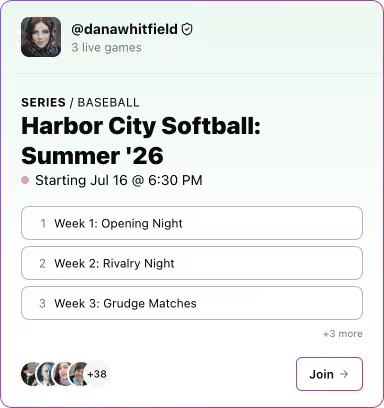
Three reasons this beats a one-shot game.
Built-in retention
Every new game in a series pings every existing participant. You don’t have to re-promote — you just publish. The series’s leaderboard gives players a reason to come back, every time.
Sponsorship that compounds
Brands pay more for sustained presence than a single impression. A series-level sponsor sits in front of an active audience for weeks, across every game in the lineup.
Yours alone
Series are exclusive to verified creators. Regular users can’t make them. When you pitch a brand or pull your audience in, this is a tool nobody else on the platform has.
A game is a moment.
A series is a relationship.
What’s inside a series.
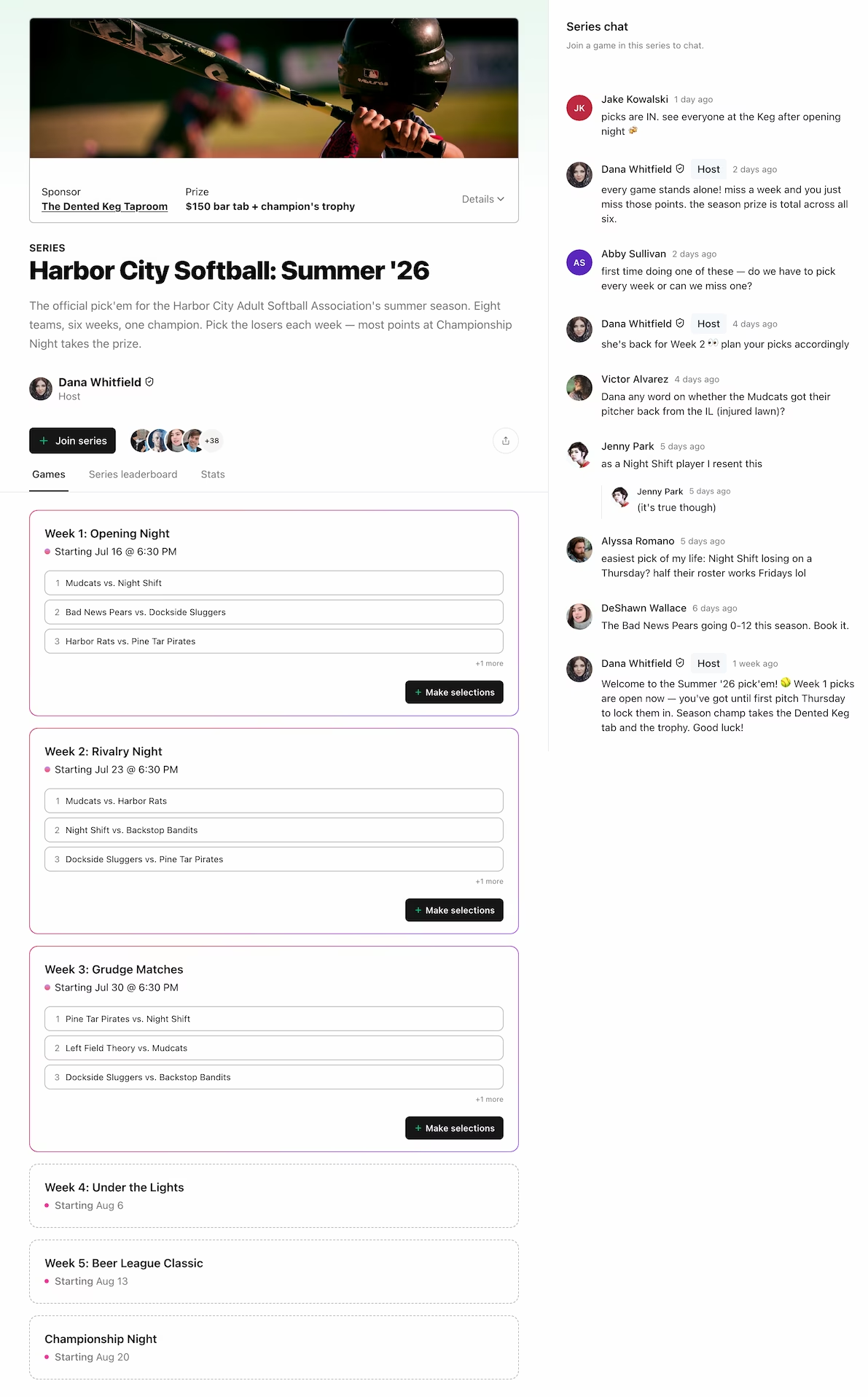
A series is a wrapper. The games inside it are still games — they keep their own sponsors, prizes, and contests. Layer on top of that:
- GamesReal ones, on a schedule. Build them in the series context or attach existing standalone games.
- RoadmapPlaceholders for what’s coming. Tease future games without committing to the full build yet.
- LeaderboardPoints sum across all games. One overall champion at the end. Players can drill into anyone’s score, week by week.
- ChatOne persistent room. Surfaces everywhere — on the series page and inside every game. Your “Host” badge marks you.
- SponsorsOne default for the series. Override at the game level when a specific game has its own brand partner. If you don’t override, the game just shows the series’s.
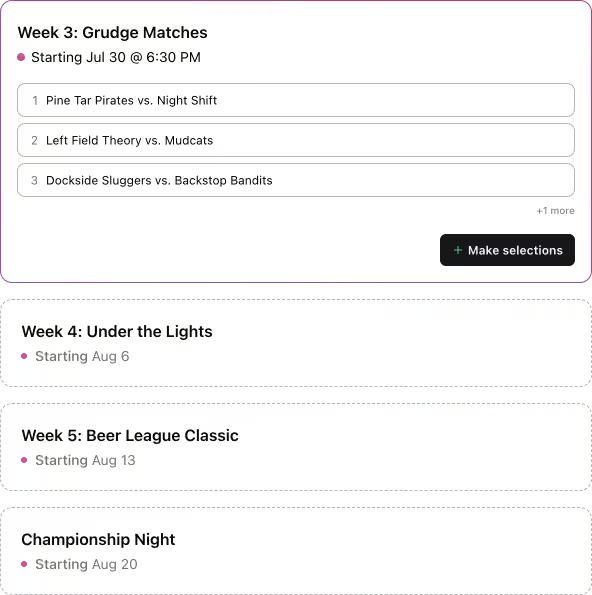
Promise now. Build it later.
“Add now, build later” lets you drop a placeholder onto the series’s roadmap with just a name and an estimated date. Your audience sees what’s coming. You build the actual game when you’re ready.
When you finish building it and publish, the placeholder slot auto-converts to the real game in place. No reordering, no awkward replacement — the slot you teased becomes the game you delivered.
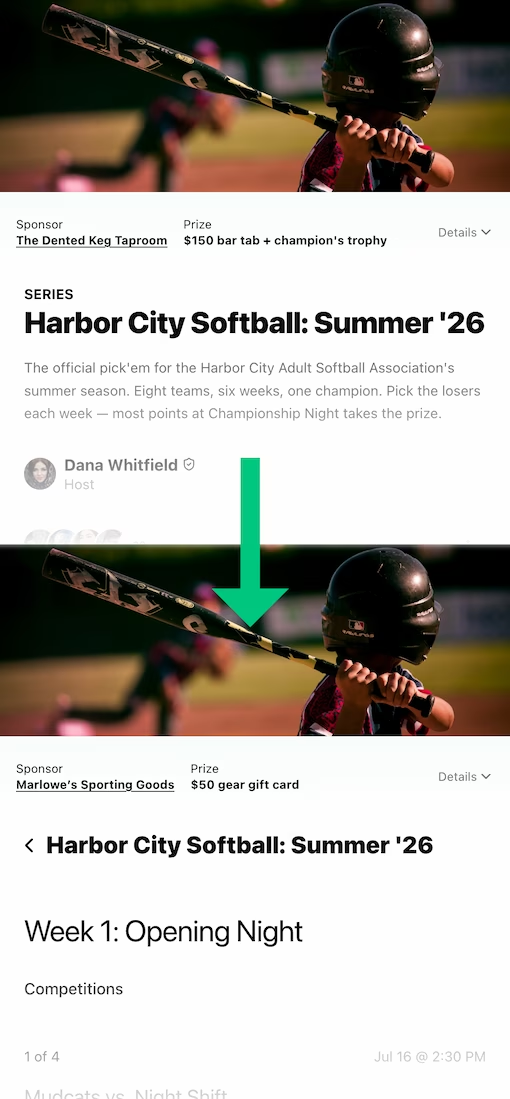
One sponsor by default. Different ones where it matters.
Set one sponsor and prize when you create the series — they’ll show up on the series page and on every game inside it. If a single game has a different brand partner, override at the game level. Most series run with one sponsor for everything.
By default
Series sponsor
Set it once. It cascades down — appears on the series page and every child game automatically.
When needed
Game override
Add a sponsor on a specific game and it overrides the series’s for that game only. Leave it blank and the game falls back to the series default.
A few mechanics before you launch.
Scoring is a simple sum
A player’s series score is the sum of points from every game in the series. Every game counts the same, and nothing gets dropped. Players can tap any leaderboard row to see exactly which games their points came from.
Late joiners can still play
Players can join a series at any time. They miss out on games whose results have already come in, but they can still play every game still open — and climb the board from there.
Games are reversible
Attached a game to a series and want to pull it out? You can. The game becomes standalone, the series’s leaderboard recalculates, and participants get an email letting them know.
Finalize when you’re ready
When the series’s done, hit Finalize. The leaderboard locks, prizes go out, and the series closes out — but stays in your archive and your audience’s history.
Now build one.
Five fields and you’re in draft. Add games when you’re ready. Publish when you want them to see it.